Servings: 1 Cake
Nian Gao (年糕, New Year Rice Cake)
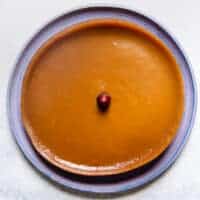
Celebrate Lunar New Year with nian gao (年糕), a steamed rice cake made of glutinous rice flour and brown sugar. This is based on Mama Lin's recipe. I made a slight modification by adding ground ginger to the batter to give the nian gao more flavor. My favorite way of enjoying this cake is slicing it into thin pieces and pan frying them in oil.
Ingredients
Nian Gao
- 1 pound (455g) glutinous rice flour
- 4 teaspoons ground ginger, (see note 1)
- 1/2 teaspoon salt
- 12.5 ounces (355g) brown sugar bricks, can sub with 2 cups packed dark brown sugar
- 1 1/2 cups (370g) water
- 1 cup (225g) canned full-fat coconut milk, (see note 2)
- 1 teaspoon canola oil or any neutral oil, plus more for greasing
- 1 teaspoon kansui, optional (see note 3)
- 1 red date, jujube for garnish
Equipment
- large mixing bowls
- saucepan
- fine mesh strainer
- large wok with lid
- steaming rack
Instructions
- In a large bowl, whisk the glutinous rice flour, ground ginger, and salt together. Set the bowl aside.
- Snap the slabs of brown sugar into smaller pieces and place them into a saucepan. If you're having trouble breaking them apart, bash them with a kitchen mallet. Add the water to the saucepan, cover it with a lid, and bring the water to boil. Keep the water boiling until the brown sugar slabs have completely dissolved. Some of the brown sugar slab will get stuck to the bottom of the saucepan, so make sure to stir occasionally. If you are using regular brown sugar, this should only take a few minutes.
- Once the sugar slabs dissolve, turn off the heat. Then, pour in the coconut milk, oil, and kansui into the saucepan and stir. Let the liquids cool for 5 to 10 minutes
- Gradually stir the liquid into the bowl with the flours. I usually add about 1/3 of hot liquid at a time and stir the batter before adding more liquid.
- Stir the batter for several minutes. The batter will feel stiff at the beginning, but should loosen up after about a minute of stirring. Stir until there are a few small lumps of flour in the batter.
- Place a fine mesh strainer over another bowl and pour the batter through the mesh. This will help to get rid of any lumps that remain in the batter.
- Lightly grease a 9-inch cake pan or any circular 9-inch metal pan (see note 4).
- Pour the batter into the greased pan. Hold onto the cake pan and tap it gently on the counter 1 to 2 times to get rid of any tiny air bubbles. Use a toothpick if there are still big bubbles.
- Then, cover the cake pan with foil. It’s not necessary to cover the pan with foil, but it helps to ensure that the nian gao will cook more smoothly on the top.
- Place a steaming rack inside a large wok (at least 14” wide). Then, fill the wok with water until there’s about a 1/2-inch gap between the water line and the top of the steaming rack. (See note 5 about overfilling/underfilling the wok with water.)
- Cover the wok with a lid and bring the water to boil.
- Once the water has boiled, carefully place the cake onto the steaming rack and cover the wok with the lid. Reduce the heat to medium (the water should be bubbling at all times, but not intensely like during a rolling boil. Steam the cake over medium heat for 50 minutes to 1 hour if you are using a thicker cake pan, about 45 to 50 minutes if you are using a thinner pan. Halfway through the steaming process, add more water to the wok as water evaporates over time.
- To test to see if the cake is done, stick a chopstick into the center of the nian gao and dig out some of the cake. The cake should look brown and slightly translucent. (See note 6) Insert a jujube into the center of the cake for decoration and to cover the hole made with the chopstick.
- Once the nian gao is fully cooked, let it cool on the counter overnight. I usually cover the cake (after it's cooled) with foil overnight. Assuming that your house isn’t hot and humid, you can leave the nian gao on the counter for 1 to 3 days. I usually store the nian gao in my fridge after 3 days. If you want to remove the cake from the pan, run a butter knife along the edge. Then, carefully lift/peel the cake out the pan.
Pan Frying Nian Gao
- The best way to enjoy the nian gao is to caramelize the edge by pan frying (or with a waffle iron). Once the nian gao hardens overnight, it is easier to slice. Cut the cake into 1/4 to 1/2-inch thick slices. Pan fry the nian gao in a nonstick pan over medium heat for 3 to 4 minutes, flipping halfway. The sides of the cake should brown and blister. You can also dip the slices of nian gao in an egg if you want some savory flavor. Whisk 1 egg with 1 tablespoon of water so that the egg can coat the nian gao evenly. Cook the nian gao for 3 to 4 minutes, flipping halfway.
Waffle Iron Method
- Heat a waffle iron to medium heat. Cut the cake into 1/4 to 1/3-inch thick slices. Grease the waffle iron with oil or butter and carefully arrange the nian gao slices inside the waffle iron. Close the lid and cook the nian gao for 4 to 6 minutes, until golden brown. Use tongs to remove nian gao and let them cool for at least 5 minutes so they can crisp up some more.
Video
Notes
- You can use more or less depending on how much you like ginger flavor.
- I typically use full-fat coconut milk, but lite coconut milk should work too.
- Kansui is a common ingredient in Cantonese pastries, often used to deepen the color of food. You can usually find kansui in Asian supermarkets or on Amazon. If kansui is difficult for you to obtain, you can omit the kansui completely. The flavor of the nian gao won’t be affected.
- My mom usually uses a round pan made of a very thin layer of stainless steel. Those pans will cook the nian gao slightly faster because of the thinner layer of metal. I decided to use a regular cake pan for this because it held more batter than the stainless steel pans in my house.
- You do not want to fill the wok with too much water. If the water touches the bottom of the cake pan during the steaming process, you may run into the risk of overheating the cake, which will cause deep creases to form on the surface of the cake. You also don’t want to underfill the wok with water. There needs to be enough water in the wok to generate adequate steam to cook the nian gao completely.
- The toothpick test doesn’t work well for this cake because your cake can still be undercooked even if the toothpick comes out cleanly.
Nutrition
Serving: 0.1cake | Calories: 352kcal | Carbohydrates: 72.3g | Protein: 3.3g | Fat: 2.9g | Saturated Fat: 4.5g | Sodium: 129mg | Fiber: 1.2g | Sugar: 34.5g
Did you make this recipe?Tag @hellolisalin or leave a star rating and comment on the blog!