Servings: 55 wontons
Fried Shrimp Wontons Recipe
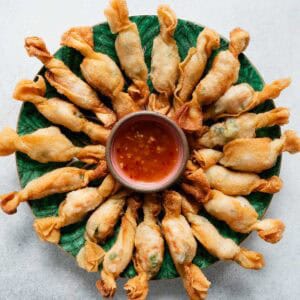
These candy-shaped shrimp wontons have a crispy exterior and a savory filling that’s packed with umami flavor. I love serving the wontons with a sweet chili sauce. You can use store-bought sweet chili sauce, or cook a batch from my recipe (make sure to cook it before preparing the wontons).
Equipment
- tongs
- paper towels optional
Ingredients
- 1 pound (454g) large shrimp (21 to 25 count)
- 1 tablespoon grated ginger
- 1 teaspoon granulated garlic
- 1/3 cup (25g) thinly sliced scallions
- 1/2 teaspoon ground white pepper
- 1 teaspoon Diamond Crystal kosher salt, or use 1/2 teaspoon table or sea salt
- 1 tablespoon oyster sauce
- 1 teaspoon toasted sesame oil
- 51 to 55 square wonton wrappers, each side should be about 3.5 inches long
- canola or vegetable oil for frying, I used about 1 3/4 cups (415ml of oil for frying in my wok)
To Serve
Instructions
- If your shrimp still has the shell on, peel and devein the shrimp. Slice the shrimp in half and transfer the pieces of shrimp to a bowl.

- Add the ginger, garlic, scallions, white pepper, salt, oyster sauce, and sesame oil to the bowl. Mix these ingredients with the shrimp until combined.
- Lay a wonton wrapper on your work surface. Place one piece of shrimp right above the bottom edge of the wrapper. Roll up the piece of shrimp tightly, like a sushi roll.

- To seal the wonton, twist and pinch together the excess wrapper on both ends (to the left and right sides of the shrimp). I usually make two 180º twists on each end and then pinch the twisted portion to make sure the shrimp is adequately sealed inside. Transfer the wrapped wonton to a large plate or sheet pan.

- Continue to wrap remaining shrimp filling into the wonton wrappers. If you are working by yourself, you may want to cover the wrapped wontons with a towel to keep the wontons from drying out. (See note 1)

- Place a cooling rack on top of a large baking sheet, like a half-sheet pan. You’ll place the fried shrimp wontons on this rack. If you want to absorb some of the oil from frying, line the rack with paper towels. (See note 2)

- Pour the oil inside a wok so that you have about 3/4 to 1 inch of oil inside the wok. (See note 3 if you don’t have a wok) Heat the oil over medium-high heat, until the oil reaches about 305ºF to 315ºF (150ºC to 157ºC) degrees. (See note 4 if you don’t have a thermometer to test the oil).
- Reduce the heat to medium. Working in batches, carefully add 5 to 7 pieces of shrimp wonton to the wok (however many you can fit without overcrowding). Once the underside of the wontons turn lightly golden, use tongs to flip the wontons over for even browning. I usually fry the wontons for 1 to 2 minutes.

- Remove the fried wontons and transfer them to the cooling rack. Continue frying the remaining wontons in batches. If at any point, you notice that the ends of the wontons are turning deep brown within seconds of adding them to the hot oil, the oil is too hot. Reduce the heat to medium-low.

- Enjoy the wontons on their own or serve them with my sweet chili sauce. The wontons taste the best when they’re still fresh. (See note 5 below for reheating directions.)
Notes
- Fry Wontons Immediately: Fry the wontons soon after they’re wrapped. The shrimp filling will turn the wonton wrappers soggy over time, increasing the likelihood that they’ll rip.
- Cooling Rack on Sheet Pan: I like putting fried foods on top of cooling racks to cool, as the air circulation will help keep the food from turning soggy. The purpose of the sheet pan is to catch any oil dripping from the cooling rack.
- Alternate Frying Vessels: If you don’t have a wok, you can use a skillet or even a saucepan. If you’re using a skillet, I recommend shallow frying the wontons, as you’ll need to pour in a lot of oil before you get an inch of oil inside the skillet. If you’re using a saucepan, you may notice a lot of brown oil stains along the sides of the saucepan once you’re done with the frying. You’ll likely need to scrub your saucepan with steel wool to get those stains out.
- Alternate Methods for Testing Oil Temperature: If you don’t have a thermometer, you can test the heat of the oil two ways. 1) Take a bamboo chopstick or spatula, and insert it into the wok (or skillet or saucepan) with the oil. Make sure the chopstick or spatula is touching the bottom of the wok. When you see tiny bubbles forming around the chopstick/spatula, the oil is hot enough for frying. If the tiny bubbles are bubbling very rapidly and intensely, the oil might be too hot. Wood chopsticks and spatulas work too but not as well for this test. 2) Another way to test the oil is to have an extra wonton skin on hand. Rip off half of the wonton skin and carefully place it in the heated oil. If the wrapper starts bubbling in the oil, then it is hot enough to add the other wontons. If the wrapper turns brown immediately, then the oil is likely too hot. You should turn off the heat and let the oil cool for a few minutes before frying the wontons.
- Reheating Wontons: They reheat very well in an air fryer. If you are reheating room-temperature wontons, reheat them at 350ºF (170ºC) for 2 to 3 minutes. If you are reheating chilled wontons from the fridge, reheat them at 350ºF for 3 to 4 minutes. I use a Cosori air fryer with a pull-out basket. If you have another type of air fryer, the heating time may vary. You can probably heat these in the oven too–I haven’t tested that.
Nutrition
Serving: 5wontons | Calories: 302kcal | Carbohydrates: 26.2g | Protein: 13.5g | Fat: 15.9g | Saturated Fat: 1.2g | Cholesterol: 77mg | Sodium: 471mg | Fiber: 0.9g
Did you make this recipe?Tag @hellolisalin or leave a star rating and comment on the blog!